

Exactly one year ago, I launched Product Delight.

I was excited. I was proud. And, if I’m being completely honest, I was also quite uncertain. I had never written or launched a book before. I had no idea what to expect, especially when it came to everything that happens after you finish writing.
One year later, I can say that writing the book was actually the easy part. The real learning came afterwards. Looking back, I see the journey in four stages: writing, editing, publishing, and marketing. Each came with a very different challenge.
1. The writing: structuring what was in my head
Writing Product Delight took a lot of time, thinking and rewriting, but it was also the part I knew how to do. I had been working on these ideas for years. I knew the stories, the framework and what I wanted to say. Or at least, I thought I did.
The hardest part was actually structuring my thinking. I had all these ideas in my head and assumed they were clear because they made sense to me. It was only when I started writing that I realized how much work it takes to turn a collection of ideas into something another person can follow.

I also wanted each chapter to stand on its own, so that someone could read it independently, while still giving the whole book a sense of flow and progression. Finding that balance was not easy.
I had written a PhD manuscript earlier in my career, so I was used to structuring complex ideas. But a PhD is written for a very specific audience. With Product Delight, I wasn’t writing for myself or for a PhD jury. I was writing for product people across industries, companies and levels of experience. The framework had to work for someone building a fintech product, a consumer app, enterprise software, a healthcare product, or something I had never even considered. That was a different kind of writing. Eventually, the manuscript started to feel like a book.
Then came editing.
2. The editing: learning to let go
This was when I really started to understand that writing a book and creating a book are two different things. I wanted Product Delight to be useful beyond my own examples and experiences, so I asked people to review it and give me honest feedback. Some comments were easy to address. Change an example. Clarify a sentence. Move something to another chapter. Others were much harder. I had to let go of ideas that were important to me because my beta readers didn’t find them as useful or as clear as I had imagined. That was difficult. When you’ve worked on an idea for years, you become attached to it. But feedback forces you to separate what you want to say from what actually helps the reader.
I kept asking myself: Is this example clear enough? Am I explaining too much? Not enough? Is the framework understandable to someone who wasn’t in my head when I created it?
And then came everything else: formatting, cover design, illustrations, references, proofreading, and countless small decisions I had never thought about when I started.
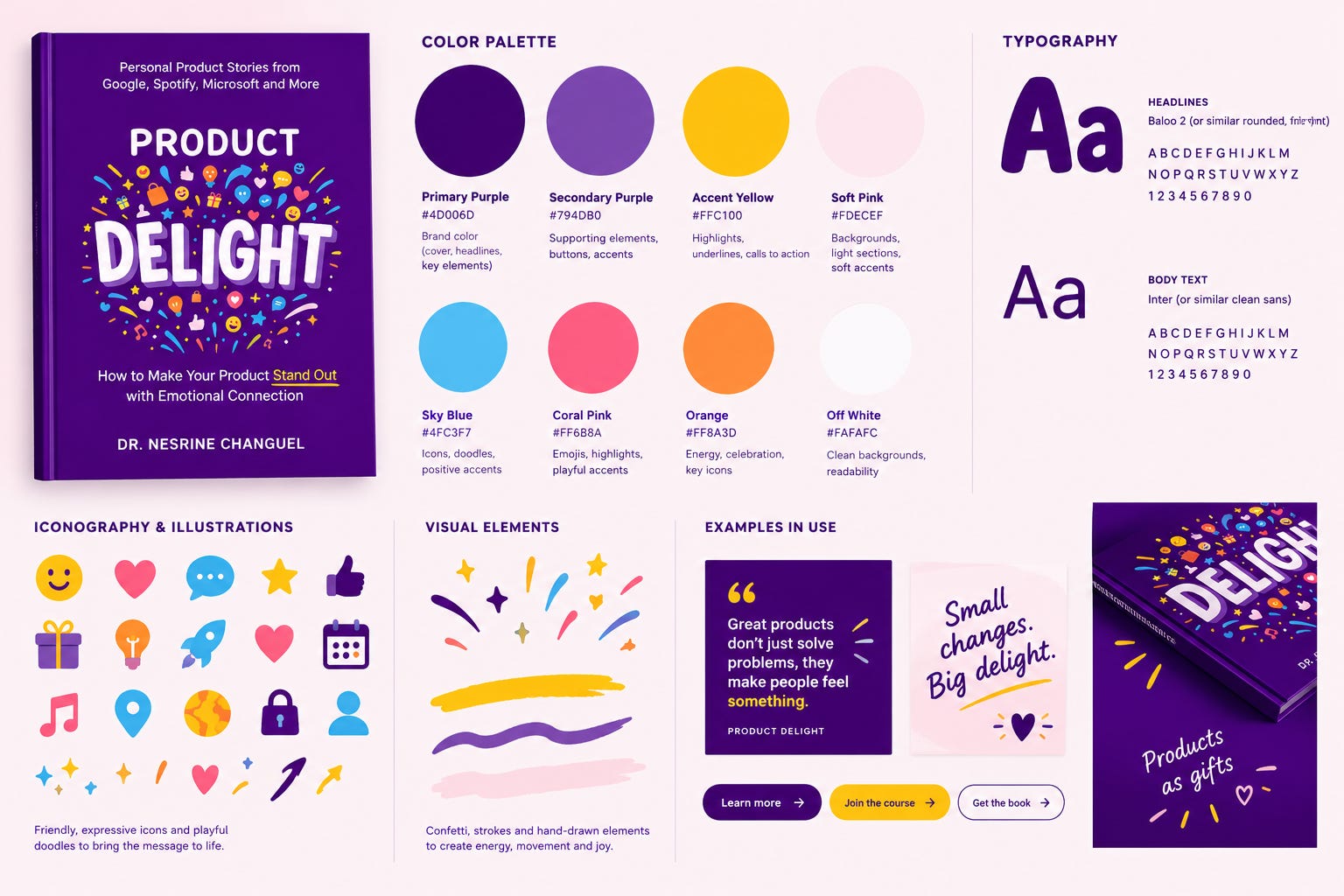
The book existed in my head. Now it had to work on the page, in someone else’s hands. That was a humbling process.
3. Publishing: a full jump into the unknown
Then came the moment when I had to actually publish it. And this is where being a self-publisher made things particularly interesting.
I had actually made a very deliberate choice to self-publish. I wanted the freedom to develop the book without being tied to a publisher’s constraints, timeline or decisions. That independence was important to me.
But when you reach the publishing stage, you do sometimes wonder: Would it have been safer to go with a publisher?
A publisher essentially babysits you through this phase. There are people who know the process, who tell you what needs to happen next and who have done it many times before. As a self-publisher, you discover the steps as you go.
The KDP page. The ISBN. Ebook formatting. Paperback formatting. Metadata. Categories. Pricing. Proof copies. Uploading files. Fixing things that don’t look right. Uploading them again.
Then, on September 23, 2025, Product Delight went live.
There is something particularly vulnerable about publishing a book. Once it’s out, you can’t explain it to every reader. You can’t add the context that seemed so obvious when you were writing it. You just have to let it go.
Suddenly, it wasn’t just a file on my computer anymore. People were buying it. People were talking about it. Messages started coming in. I have to admit, I was probably checking my KDP page every hour. Watching the sales come in and seeing Product Delight climb the Amazon rankings was incredibly exciting. And then seeing it appear as a bestseller on Amazon was a real blast.
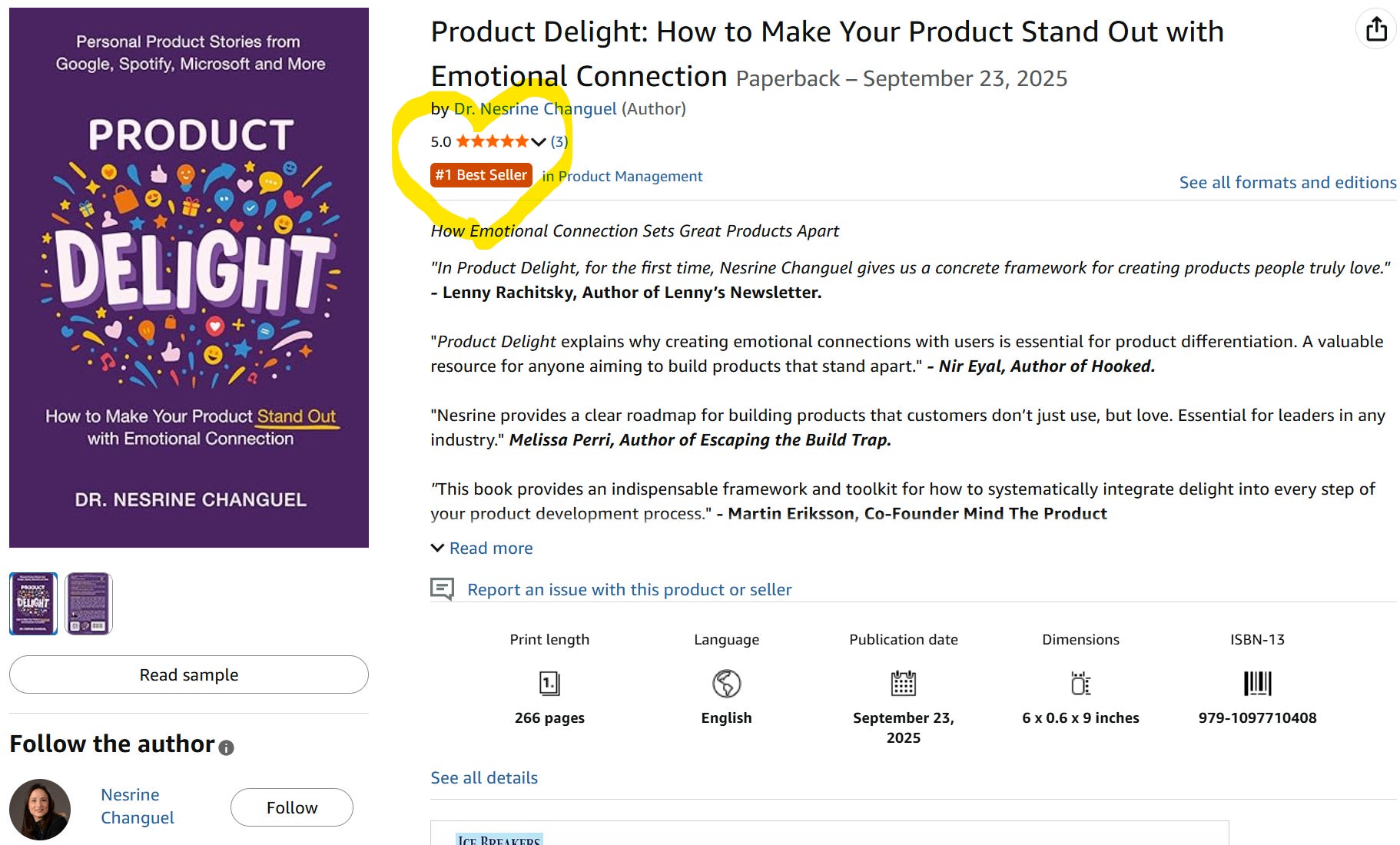
After months and years of working on something mostly in isolation, there was suddenly proof that people were actually picking it up. That moment made all the uncertainty worth it.
But the launch was only the beginning.
4. Marketing: giving the idea a life
This was probably the hardest part for me.
I had never really thought of myself as a marketer, and suddenly I had to figure out how to talk about my own book. How much should I share? How much should I explain about the framework? And how much should I leave for readers to discover in the book?
I didn’t want every post or conversation to become a summary of Product Delight. At the same time, I needed people to understand why emotional connection matters in product and design, and why I had spent so much time writing about it. So I started talking about it. A lot.
I went on podcasts, joined conferences, gave talks, ran workshops, and had conversations with product and design communities in different places. I also did a book tour, with launch events in Paris, San Francisco and London, and later brought Product Delight to conferences and communities in sooo many places around the world.
Those events made the book feel much more real. It was no longer just something I had written and put on Amazon. I was meeting people who had read it, discussing the ideas with them, hearing how they saw emotional connection in their own products, and sometimes having completely new conversations that I could never have had while writing the book alone.
People also started inviting me to speak about Product Delight, and companies began using the ideas. I started teaching the framework in academia and with product teams, turning some of the ideas into workshops and courses.
And that became one of the most rewarding parts of the whole journey: seeing people take the framework and make it relevant to their own products, teams and contexts.
And somewhere along the way, I realized that marketing was not really about selling more books. It was about giving the idea a life beyond the pages.
One year later
One year after launching Product Delight, there are more cities to come, more companies to work with and more students to teach. I’ve also started turning the framework into Product Delight workshops and courses, where teams can take the ideas from the book and apply them directly to products they are building.
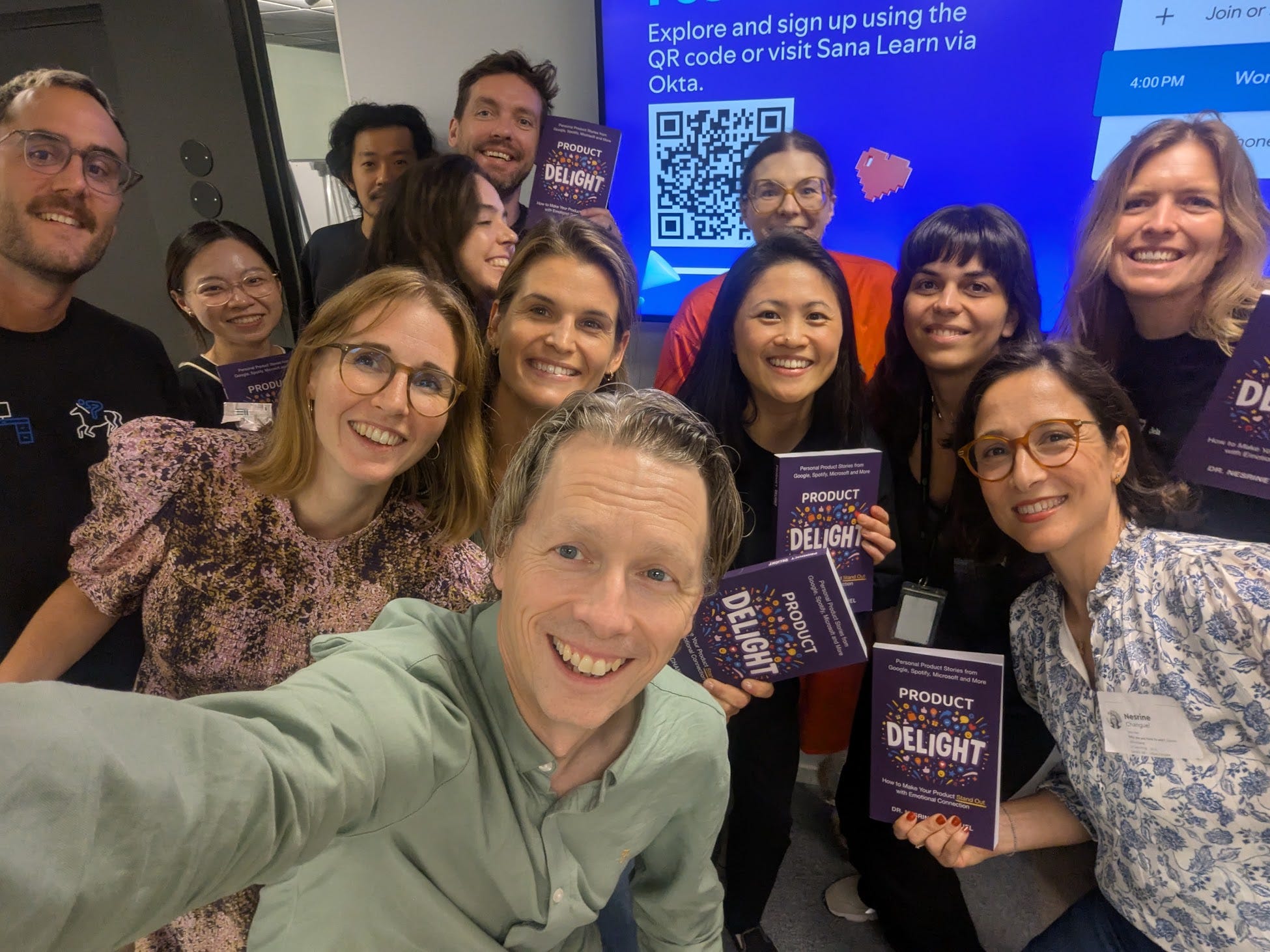
If you’ve read the book, I’d love to hear how you’ve used the ideas. And if you haven’t yet, you can find Product Delight on Amazon.
You can also listen to my conversation with Lenny here: Product Delight on Lenny’s Podcast.
The book was the thing I created. But the workshops, classrooms, companies, conversations and people who picked up the ideas and made them their own are what gave it a life. That’s something I never could have planned when I started writing it.
Happy first anniversary, Product Delight.
And thank you to everyone who has been part of the journey so far.

Thank you for sharing this story of how you wrote the book, the struggles and successes along the way. And thank you for the book!
Happy first anniversary, Product Delight! I have the digital edition and I'm still enjoying my way through it. Congratulations, Nesrine! You've done a great job.